

Use of Force Expert Witness, on Either Side of the Caption
Direct line: (239) 571-1840 · GregoryGilbertson@proton.me
Attorney and law-firm inquiries only
A use of force expert witness measures an officer's force against the agency's policy, the officer's training and generally accepted police practices, on a record made in stages: the policy and training before the incident, the dispatch record and video during it, and the reports and reviews after it. Plaintiff's counsel, the criminal defense bar and counsel defending officers and agencies retain the same analysis, and legal conclusions remain counsel's.
Three experts. Over 110 years.
Professor Gregory Gilbertson (Ret.), FBI Special Agent Christopher Holland (Ret.), and Sheriff Robert Snaza consult with attorneys nationwide regarding police practices and procedures, use of force, false arrest, police misconduct, criminal, and self-defense casework.
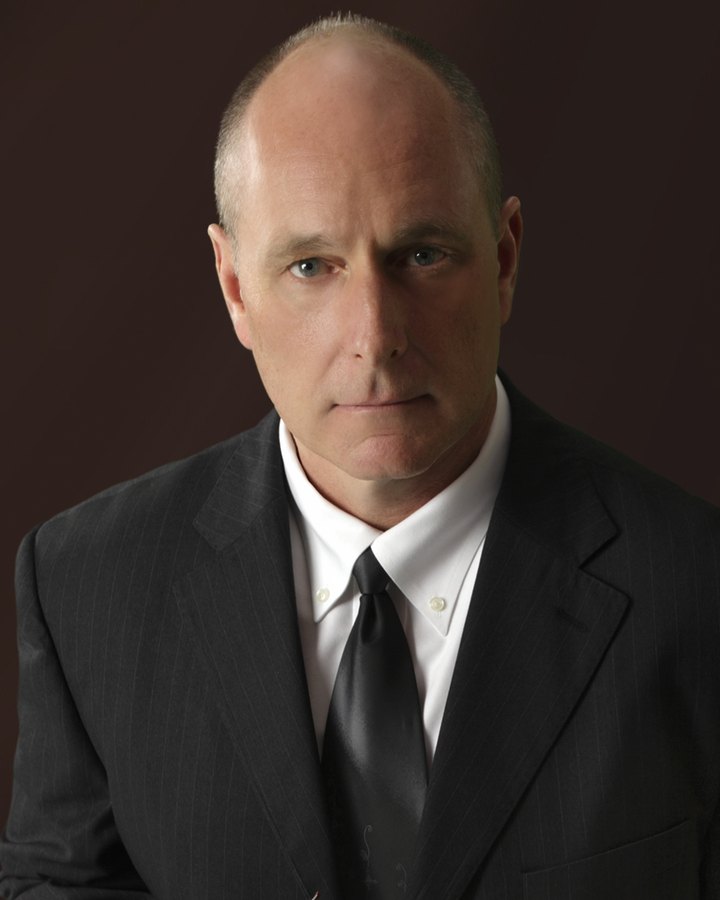 CEO & Owner
Thirty-eight years in four uniforms: street cop, soldier, professor, investigator. More than 220 matters in 42 states and D.C. since 2014.
Full biography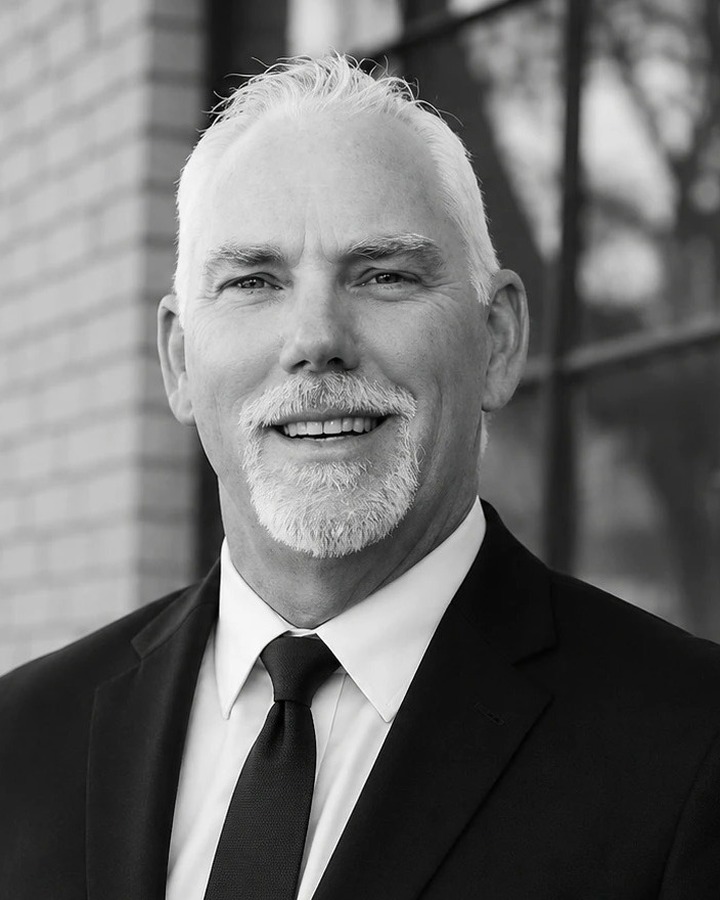 Consultant
More than thirty-five years in public safety: Sheriff of Lewis County, Washington, since his election in 2015, and six years as a commissioner of the state board that sets peace-officer training standards.
Full profile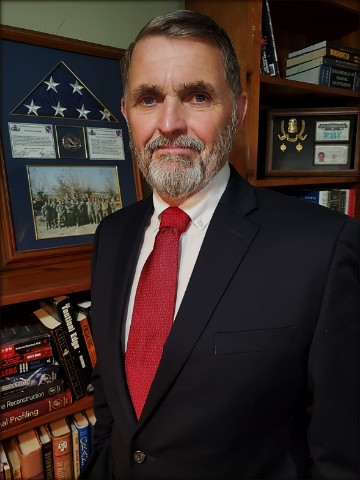 Consultant
Forty years of investigative casework, from patrolman in St. Louis County to the FBI in Chicago, and on to task forces in Afghanistan and Liberia. His work on the Idaho student murders is examined in Broken Plea, the New York Times bestseller by Christopher Whitcomb.
Full profileThe Hon. Richard A. Jones United States District Judge“Mr. Gilbertson’s qualifications demonstrate extensive experience in policing. His expansive work as a police officer in Georgia, with assignments as a SWAT team officer, juvenile court investigator, school resource officer, stakeout squad officer, senior patrolman, and patrolman; then a career as a tenured college professor and university lecturer teaching criminal justice courses to degree-seeking students at colleges and universities, and as a licensed private investigator conducting felony pretrial investigations for attorneys in Washington State in dozens of criminal cases, makes him unique in the field of police expert witnesses. The Court finds that, based on his experience, Mr. Gilbertson’s testimony can be expected to have a reliable basis in knowledge and experience of police practices.”
What a police use of force expert is retained to measure.
A police use of force expert answers one question for each application of force in the record: whether it was consistent with the agency's written policy, the training the officer actually received and generally accepted police practices, on the totality of the facts and circumstances the officer faced. The question is the same whichever party asks it. Plaintiff's counsel in civil rights matters, the criminal defense bar, and counsel defending officers and agencies retain the same analysis, and every engagement begins with a conflict check, explained at what happens in a conflict check.
Use of force expert is the narrowest of the labels the discipline goes by. The broader ones, police practices expert, police procedures expert and law enforcement expert, are defined at what the discipline covers. This page covers the force analysis itself: who retains it, the record it reads, and what it can and cannot say.
In the practice's table of cases, 75 matters carry the use of force label, 53 of them in federal court and 22 in state court, across 21 states.
For plaintiff's counsel, each application of force is measured on its own.
For plaintiff's counsel in a civil rights matter, the question is where the agency's own documents show the force departing from policy, training and accepted practice, and where they show it staying within them. The analysis answers application by application. One report can find a takedown consistent with the officer's training and the strikes that followed it inconsistent, and each finding names the part of the record behind it, so counsel can see which parts of the theory the record carries.
The excessive force claim itself, its fact patterns from shootings to restraints, and the yardsticks a force case is decided on are set out on the use of force page. Before a complaint is filed, a preliminary case-merit evaluation, one of the published engagement forms, gives counsel an early read on whether the record supports the theory.
For counsel defending an officer or an agency, the same yardsticks apply.
Counsel defending an officer or an agency in a civil suit gets the same three yardsticks, applied the same way: the policy in force on the date of the incident, the training in the officer's file, and generally accepted police practices. Where the record shows the officer's decisions tracked them, the report says so in the terms it would use for a departure, and where it shows a departure, counsel hears that early and in the same practices vocabulary.
For an agency, the question moves from the encounter to the documents behind it: the policy, the training curriculum and how supervisors handled earlier incidents. Those records are read for what the agency did as well as for what it did not do. The report does not argue immunity or any other legal defense; it supplies the practices record counsel argues from. What a defense retention involves is set out under defense retentions, and why a retention history on both sides matters in front of a jury under retained by both sides.
When an officer is charged over force used on duty, the measure stays the same.
When a current or former officer is charged with a crime arising from force used on duty, the officer's defense counsel can retain the same analysis. The forum changes and the measure does not: the force is read against the policy in force that day, the training the officer actually received and generally accepted police practices, in the order the officer met the events and without hindsight, and the report still stops at police practices.
A criminal file often holds more than one account from the officer, given at different times and for different purposes. The analysis identifies which statements in the file were compelled administrative statements and which were not, and reads each one where it falls in the sequence; how those statements are taken is covered at officer statements after a use of force. Whether any statement may be used, the elements of the offense, any justification defense and the instructions the jury receives are legal questions for counsel and the court.
When the client is a civilian, the force in question can be the officers' or the client's.
Criminal defense counsel for a civilian meets force from two directions. Where the charge rests on the officers' own account of the encounter, as charges of resisting arrest, obstruction and assault on an officer often do, the officers' force is part of the account the charge depends on, and it is measured against policy, training and accepted practice the same way it would be in a civil case. Which charges put which part of the police file in question is mapped at criminal-defense support.
Where the client used force and claims self-defense, the analysis does something different. It explains the use-of-force framework officers are trained on, which gives the finder of fact a working vocabulary for threat, necessity and proportionality, and it measures the police investigation of the incident against accepted practice. It does not hold a civilian to an agency's policy, and what the client believed or felt is a question for the finder of fact. That practice is set out at self-defense.
The force record begins before the force, in the policy manual and the training file.
A force record is made in stages, and when a document was made shapes what it can prove. The first stage is written before anyone involved knew there would be an incident: the agency's use-of-force policy and general orders, and the officer's academy, field training and in-service records. Those documents record what the officer was required to do and what the officer was taught, and they were created for the agency's own purposes rather than for a lawsuit or a prosecution.
The policy that matters is the version in force on the date of the incident, not the one published later, and the training that matters is what the file shows the officer actually received, read course by course and date by date as set out at what training records reveal. Whether the agency taught force as a continuum or as a decision model shapes the vocabulary of both sets of documents, and the two models are compared at force options and decision models.
The dispatch record and the video are made as the encounter happens.
The second stage is the record created during the encounter itself: the call for service, the dispatch entries and radio traffic, and the body-worn, dash and surveillance video. These records were created as events unfolded rather than described afterward. They fix the sequence the rest of the record is checked against, and the analysis reconciles them against one another before it characterizes any decision.
In Scott v. Harris, 550 U.S. 372 (2007), the Supreme Court said that a court ruling on a motion for summary judgment should not adopt a version of the facts so blatantly contradicted by the record that no reasonable jury could believe it, and it viewed the facts of the car chase before it as the videotape showed them. The analysis reads a recording for what it shows and for what it leaves out, and questions about a recording's integrity or enhancement go to qualified experts in that discipline.
Hindsight stays out of the analysis, and the minutes before the force stay in.
The legal frame for the encounter comes from Graham v. Connor, 490 U.S. 386 (1989), which holds that a claim that officers used excessive force in an arrest, an investigatory stop or another seizure of a free citizen is analyzed under the Fourth Amendment's objective reasonableness standard, judged from the perspective of a reasonable officer on the scene rather than with hindsight. The factors the Court named are taken one at a time at Graham v. Connor explained. Deadly force used against a fleeing suspect adds Tennessee v. Garner, 471 U.S. 1 (1985), which holds that using deadly force to apprehend a suspect is a seizure and must be reasonable under the Fourth Amendment; the rule it states is set out at the deadly-force standard.
Keeping hindsight out does not mean leaving out what came first. In Barnes v. Felix, No. 23-1239 (U.S. May 15, 2025), the Supreme Court rejected a rule that confined a court's review of a police shooting to the moment of the threat, and held that a court weighing an officer's use of force must look at all the relevant circumstances, including what happened before the moment of force. The Court said the inquiry has no time limit, that the situation at the precise time of the shooting will often matter most, and that the earlier context may benefit either party. It left open whether, or how, it matters to that analysis that the officer's own actions created the danger.
A practices analysis also reads the whole encounter, though it does not answer the Fourth Amendment question those cases put to a court. It reads the encounter forward from the first dispatch entry, fixes what the officer knew at each decision point, and keeps out anything learned only afterward, the method set out at totality of the circumstances. The approach, the positioning and any warning are measured against what policy and training required when each happened, and how a shooting record divides into the approach, the shots and the aftermath is set out under officer-involved shootings.
After the force, the agency writes its own account and then reviews it.
The third stage is written after the force, by people who knew it had happened. The officer's use-of-force report and any supplements are read in the order they were filed, for what the agency's reporting rule required them to contain; that standard is at use-of-force reporting standards. Whether the officer could watch the footage before writing, and the records that show whether a viewing occurred, are covered at body-worn camera policy.
The first-line supervisor is the agency's first reviewer of the force, and the review is read for what the supervisor actually did, as set out at supervisor use-of-force reviews. Later, a review board, where the agency convenes one, and an internal affairs investigation, where one is opened, produce the agency's own findings, described at force review boards and internal affairs review.
An agency's finding, whichever way it went, is part of the record and not the measure the analysis applies. A finding that the force was within policy is read against what the recordings and reports show, and so is a finding that it was not, which is why the agency's own paper can serve plaintiff's counsel and the defense alike.
What a use of force opinion says, and what it leaves to others.
The opinion states, practice by practice, whether the force documented in the record was consistent with the agency's policy, the officer's training and generally accepted police practices in the circumstances the officer faced. Its limits are stated on the record rather than left for cross-examination to find.
It does not say whether the force was objectively reasonable under the Fourth Amendment, excessive in the legal sense, or grounds for liability or guilt. Legal conclusions remain counsel's, and where that line sits is set out at legal conclusions and the expert. It does not say what the officer intended or felt: Graham measures the constitutional question without regard to the officer's underlying intent or motivation, and the practices analysis measures conduct. And it does not answer medical questions, human factors questions such as perception and reaction time, or questions about a recording's integrity, which go to qualified experts in those disciplines.
Professor Gilbertson is not an attorney and gives no legal advice. Retaining counsel is responsible for the admissibility of reports and testimony, and no outcome is promised in any matter.
Asked by counsel on either side of a force case.
Who retains a police use of force expert witness?
Will a use of force expert say the force was excessive or unreasonable?
Does a use of force analysis consider what happened before the force was used?
Can a use of force expert be retained when a police officer is criminally charged?
What qualifies Professor Gilbertson as a use of force expert witness?
How much does a use of force expert witness cost?
Send the force record, from either side.
Attorney inquiries are answered directly. If a case presents a conflict, you will hear it immediately.
Inquiry sent.
You will hear back directly. If the matter is urgent, call (239) 571-1840.
Conflicts are checked before any substantive discussion. Please do not send privileged material with a first inquiry; after retention the record is exchanged on physical media. Gregory consults for attorneys and their staff only, and does not provide legal advice or attorney referrals to individuals.