

Sexual Misconduct Under Color of Authority
Direct line: (239) 571-1840 · GregoryGilbertson@proton.me
Attorney and law-firm inquiries only
An officer committing sexual misconduct under color of authority has every reason to keep it off the record, so the police practices questions are answered from the records around it. The police practices analysis reads the officer's documented contacts and the gaps between the records, the stops and transports, the complaints and what the agency did with them, and what supervision could have seen at the time. What happened in any encounter is for the trier of fact.
Three experts. Over 110 years.
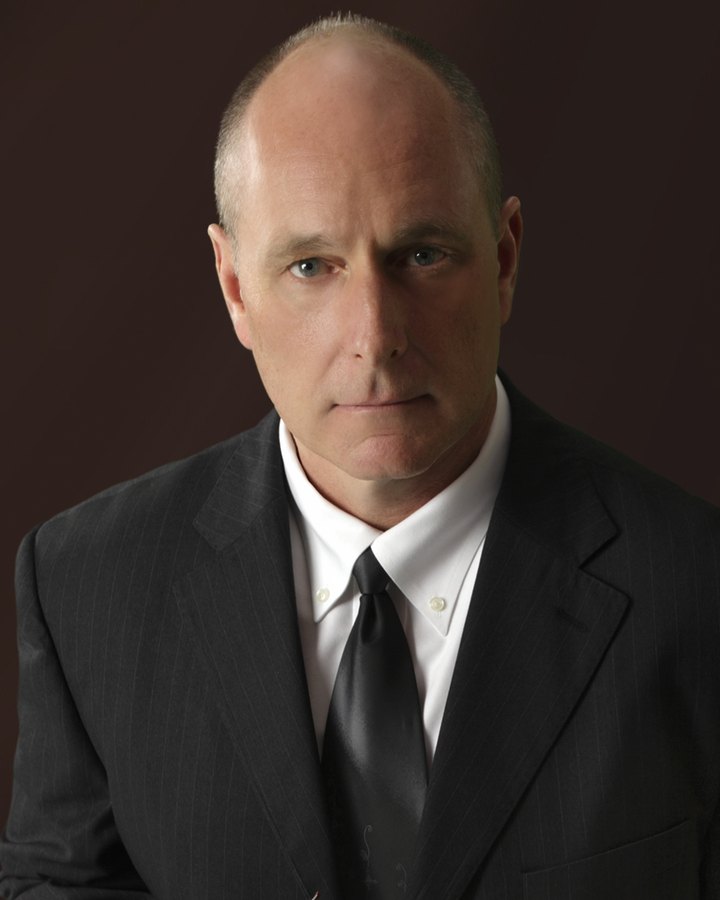
Professor Gregory Gilbertson (Ret.), FBI Special Agent Christopher Holland (Ret.), and Sheriff Robert Snaza consult with attorneys nationwide regarding police practices and procedures, use of force, false arrest, police misconduct, criminal, and self-defense casework.
 CEO & Owner
Thirty-eight years in four uniforms: street cop, soldier, professor, investigator. More than 220 matters in 42 states and D.C. since 2014.
Full biography Consultant
More than thirty-five years in public safety: Sheriff of Lewis County, Washington, since his election in 2015, and six years as a commissioner of the state board that sets peace-officer training standards.
Full profile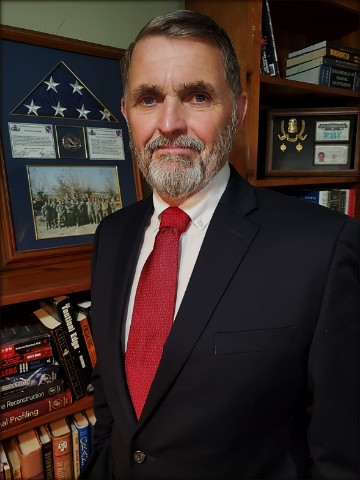 Consultant
Forty years of investigative casework, from patrolman in St. Louis County to the FBI in Chicago, and on to task forces in Afghanistan and Liberia. His work on the Idaho student murders is examined in Broken Plea, the New York Times bestseller by Christopher Whitcomb.
Full profileThe Hon. Richard A. Jones United States District Judge“Mr. Gilbertson’s qualifications demonstrate extensive experience in policing. His expansive work as a police officer in Georgia, with assignments as a SWAT team officer, juvenile court investigator, school resource officer, stakeout squad officer, senior patrolman, and patrolman; then a career as a tenured college professor and university lecturer teaching criminal justice courses to degree-seeking students at colleges and universities, and as a licensed private investigator conducting felony pretrial investigations for attorneys in Washington State in dozens of criminal cases, makes him unique in the field of police expert witnesses. The Court finds that, based on his experience, Mr. Gilbertson’s testimony can be expected to have a reliable basis in knowledge and experience of police practices.”
The badge is what makes this misconduct a police practices case.
Sexual misconduct under color of authority is sexual misconduct in which an officer uses the position: sexual contact or demands during a stop, a search or a transport; a detention, a warrant or a threatened arrest used to obtain sexual contact; and repeated sexual contact with a victim, a witness or an informant met on duty. It can also occur off duty, where an officer uses the badge, the uniform or the authority to detain outside a shift. Where the adult accused of sexual misconduct toward a student is a teacher, coach, counselor or other school employee rather than an officer, Professor Gilbertson's work on those cases is set out under school sexual abuse cases.
What happened in a given encounter is for the trier of fact to find. The police practices question is what the agency's systems were designed to prevent and detect, and what those systems did before and after the conduct alleged. Whether the officer acted under color of law, and whether the agency is liable for that conduct, are legal questions. Legal conclusions remain counsel's; the expert addresses police practices.
The contacts an officer documented, and the ones the record does not show.
In a sexual misconduct matter, the officer's documented activity is among the first records read. Dispatch assignments, self-initiated stops, field interview records, citations and warnings, and body-worn camera activations show what was recorded about where the officer was and whom the officer contacted, and set against one another they reveal contacts that appear in one record and not in another.
Gaps are read as practices questions. A stop in the dispatch record with no camera activation, a contact the officer reported to dispatch with no report to follow, or a run of self-initiated contacts that ended without any enforcement action are each measured against the agency's documentation and activation policies, as covered in body-worn camera policy and under CAD reports.
Transports have a documentation practice of their own. Where an agency requires an officer transporting a person, and particularly a person of the opposite sex, to notify dispatch of the start and end of the transport, the location and the mileage, those entries, and their absence, show whether the officer reported the transport the way the practice required.
Search and pat-down rules are part of the practices record.
Where sexual misconduct is alleged during a search or a pat-down, the agency's search policy is the first measure. Where the agency's policy restricts or conditions searches of a person of the opposite sex, calls for a witness or a same-sex officer where one is available, or requires the search and its justification to be documented, the analysis reads those rules, the training on them, and whether the officer's documentation shows the search the policy required.
A search that appears in no report, or a report that describes a search inconsistent with the policy, is measured against those rules, and the stop behind it is measured against the practices set out at stops, frisks and detention.
An officer's own records can show a pattern before any complaint does.
Where an officer's sexual misconduct repeated, it can leave traces in the officer's own activity records long before anyone reports it. Read across months rather than a single shift, the records can show repeated self-initiated contacts with the same person, stops concentrated at hours and places with little oversight, or contacts documented differently from the rest of the officer's work.
The analysis identifies what the records show and asks whether a supervisor applying the agency's own review practices could have seen it. Whether a pattern is statistically meaningful is a different question, and it goes, on the record, to qualified experts in that discipline.
Complaints show what the agency was told, and when.
Complaints against the officer, including those dismissed, withdrawn or closed informally, are read for what the agency learned and what it did in response. A complaint that alleged sexual misconduct, or conduct close to it, and was closed without an investigation is a finding in its own right, measured against the agency's complaint intake and internal affairs procedures, as set out in internal affairs review standards.
Some people harmed by this misconduct never file a formal complaint, and the record can show the agency learning of it another way: a supervisor's note, a report from another officer, a call to the department, a court filing. Each is read for the date the agency received it and what followed.
Supervision is measured by what it could have seen at the time.
Sexual misconduct by an officer can repeat before it is reported, which puts the supervision record at the center of the case. The analysis asks what a first-line supervisor reviewing the officer's activity, camera activations, complaints and assignments could have seen at the time, measured against the agency's supervision policy and generally accepted practice, and whether an early intervention system counted the signals it was built to count, as described in early warning systems and supervision.
Where the record points past the officer, to supervision, discipline or a gap in policy, the organizational analysis is set out at supervision and discipline, and the evidence a pattern theory runs on at Monell pattern and practice.
What other officers knew, and whether the record shows they reported it.
An officer's sexual misconduct is sometimes known to other officers before it reaches a supervisor: a partner who saw a contact, an officer who heard talk of it, a colleague who received a complaint informally. Where the agency's policy required officers to report misconduct by a colleague, what those officers knew, when they knew it and what they did with it are part of the practices record. The duty to report sits alongside the duty to intervene, at failure to intervene and render aid.
What the agency knew when it hired the officer, and each time it kept the officer.
Where the officer's history included complaints alleging sexual misconduct or conduct close to it, discipline or a separation from another agency, the question becomes what the hiring agency knew when it hired the officer and each time it kept the officer in place, which is the analysis set out at hiring and retention.
Certification history belongs to the same question, and what those records are is covered in POST certification.
How the agency investigated its own officer is part of the record.
When an allegation reached the agency, the investigation that followed is read the way any administrative investigation is read: who conducted it, whether the complainant and the witnesses were interviewed and how, whether the officer's activity records were pulled and compared, and whether the finding follows from what was gathered. How an internal affairs file is read as a record is covered at internal affairs review.
Where the officer also faced a criminal investigation, its file adds to the record. The police practices analysis reads it for what the agency did and when, and leaves the question of the officer's guilt where it belongs.
Policies aimed at this misconduct are specific, and they are read line by line.
Where an agency addresses sexual misconduct by officers in writing, the directives usually sit in several places at once: a prohibition on sexual contact with people officers encounter on duty, transport and search rules, reporting duties for officers who learn of misconduct by a colleague, and complaint procedures. National model policies from organizations such as the IACP inform what generally accepted practice includes, and the agency's own versions are read against them, as described in generally accepted police practices.
Whether the policy was adequate and whether the agency followed it are stated as separate findings, a distinction drawn in reading a police policy manual.
A sensitive record, kept off email and online sharing services.
Records in sexual misconduct matters are sensitive, and they are handled accordingly. Nothing privileged travels with a first inquiry, privileged material is never exchanged by email, and after retention the record travels on physical media, a computer flash drive or an external hard drive, rather than through online sharing services.
The analysis can be retained by plaintiff's counsel or by counsel defending an agency or an officer, on the same standards either way, and every engagement begins with a conflict check. Retention is a non-refundable $9,000 flat fee covering discovery review and the written expert report; the schedule is at For Counsel.
Sexual misconduct matters, asked before the record is sent.
Can a police practices expert say whether the misconduct happened?
What if the officer's camera was off during the contact?
Does the analysis extend to what the agency did after the allegation?
Does the analysis address the training the officer received?
Which records should counsel request first in a sexual misconduct matter?
Does the analysis cover relationships an officer began with people met on duty?
What if the officer resigned before the investigation finished?
Send the sexual misconduct record.
Attorney inquiries are answered directly. If a case presents a conflict, you will hear it immediately.
Inquiry sent.
You will hear back directly. If the matter is urgent, call (239) 571-1840.
Conflicts are checked before any substantive discussion. Please do not send privileged material with a first inquiry; after retention the record is exchanged on physical media. Gregory consults for attorneys and their staff only, and does not provide legal advice or attorney referrals to individuals.